


Being stranded by a car that won’t start is inconvenient at the best of times, and it can be even more frustrating when your car won’t start but the lights come on. Modern cars are filled with electronics that can make it difficult to diagnose the problem, but this common issue usually indicates there’s something wrong with the starter or ignition.
In most cases, you’ll need professional help to deal with a car that won’t start. A qualified auto electrician technician will be able to isolate and repair the issue, so you can get your day back on track.
One of the ways we do that is by assessing the other electrical systems on a car. The car won’t start, but do the lights work? How about the other accessories? Does anything happen when the key is turned? These things all help us figure out what’s going on.
In this article we’ll explore the issue in more detail and see how you can narrow down the problem.
Top Reasons Your Car Won’t Start
1. Dead Battery
Dead batteries are the leading cause of a car that won’t start.
Most cars use lead-acid batteries for starting. These provide plenty of power while they’re in good condition, but they can fail suddenly. If your engine doesn’t start or struggles to crank, it’s probably an issue with the battery.
How to diagnose a dead battery
You can diagnose a flat battery by turning the headlights on. If they’re dim, flickering or if they don’t come on at all, the battery is the likely culprit.
You could also:
- Check battery voltage with a multimeter (healthy reading is 12.6V when off, 14.2-14.7V when running)
- Inspect terminals for corrosion (white or greenish powder)
- Look for bulging or leaking on the battery case
- Consider battery age (most last 3-5 years in Australian conditions)
How to jumpstart a flat battery
It’s usually possible to jumpstart a car with a flat battery. If you aren’t confident with jumpstarting, we recommend calling roadside assistance or your mechanic for help. Improper jumpstarting can damage the computers that control your engine.
If you have a set of jumper cables, you can jumpstart a car by:
- Connecting the RED lead to the POSITIVE terminal of the dead battery
- Connecting the RED lead to the POSITIVE terminal of the healthy battery
- Connecting the BLACK lead to the NEGATIVE terminal of the healthy battery
- Connecting the BLACK lead to an unpainted metal part of the dead car (such as a bolt or bracket)
- Start the engine in the healthy car and let it run for a few minutes
- Start the engine in the dead car and allow it to run for a few minutes to recharge
- Remove the cables in reverse order
- Drive the dead car for a minimum of 30 minutes to recharge the battery
Dead batteries often struggle to hold a charge especially if you are powering large or multiple appliances. The dead battery should be replaced immediately and may require a dual battery install.
2. Faulty Starter Motor
The starter motor is responsible for getting your car’s engine running. Starter motors rarely fail, but they tend to fail suddenly when they do. You likely have an issue with the starter motor if:
- Nothing happens when you turn the key in the ignition
- You hear a single, loud click when starting the car, but the engine doesn’t crank
- You hear rapid-fire clicking when you turn the key
- You hear grinding or whirring noises when you turn the key
Talk to an auto electrician if you notice any of the above symptoms. You can damage the engine if you continue trying to start your car with a faulty starter motor.
3. Faulty Alternator
A car’s alternator is responsible for recharging the starter battery while driving. Faulty alternators typically don’t provide enough energy to recharge the battery, and you’ll face symptoms like:
- Dead battery (especially if the battery dies after being replaced)
- Dim headlights
- Accessories that won’t turn on
- Electrical issues, like power windows that don’t behave properly
- Engine stalling while driving
- Whining sounds while the engine is running
- Burning smell coming from the engine bay
- Warning lights on the dash
Alternator repairs can be tricky. They cause all sorts of electrical gremlins that are difficult to trace. You’ll need to speak to an auto electrician about the problem.
4. Ignition Issues
Your car’s ignition system is responsible for delivering power to the engine. It’s a network of electrical components that stretches from the battery to the key, starter motor, coil packs and spark plugs.
Faulty ignition usually presents with difficulties starting the engine. The engine may crank but fail to start, or it may not crank at all. The biggest indicator of a failing ignition is when your car stalls while driving. If you have plenty of fuel but the car stalls (especially if it stalls briefly but comes back to life), it’s likely a problem with the ignition.
5. Fuel System Issues
Even with a good battery and functioning starter motor, your car won't start if fuel isn't reaching the engine properly. Here are common fuel system issues that can prevent starting:
- Empty fuel tank: It sounds obvious, but a common reason for a car not starting is simply running out of fuel. Fuel gauges ca be inaccurate, especially in older vehicles.
- Clogged fuel filter: A clogged fuel filter restricts flow to the engine. Most manufacturers recommend replacing the filter every 30-40,000 km.
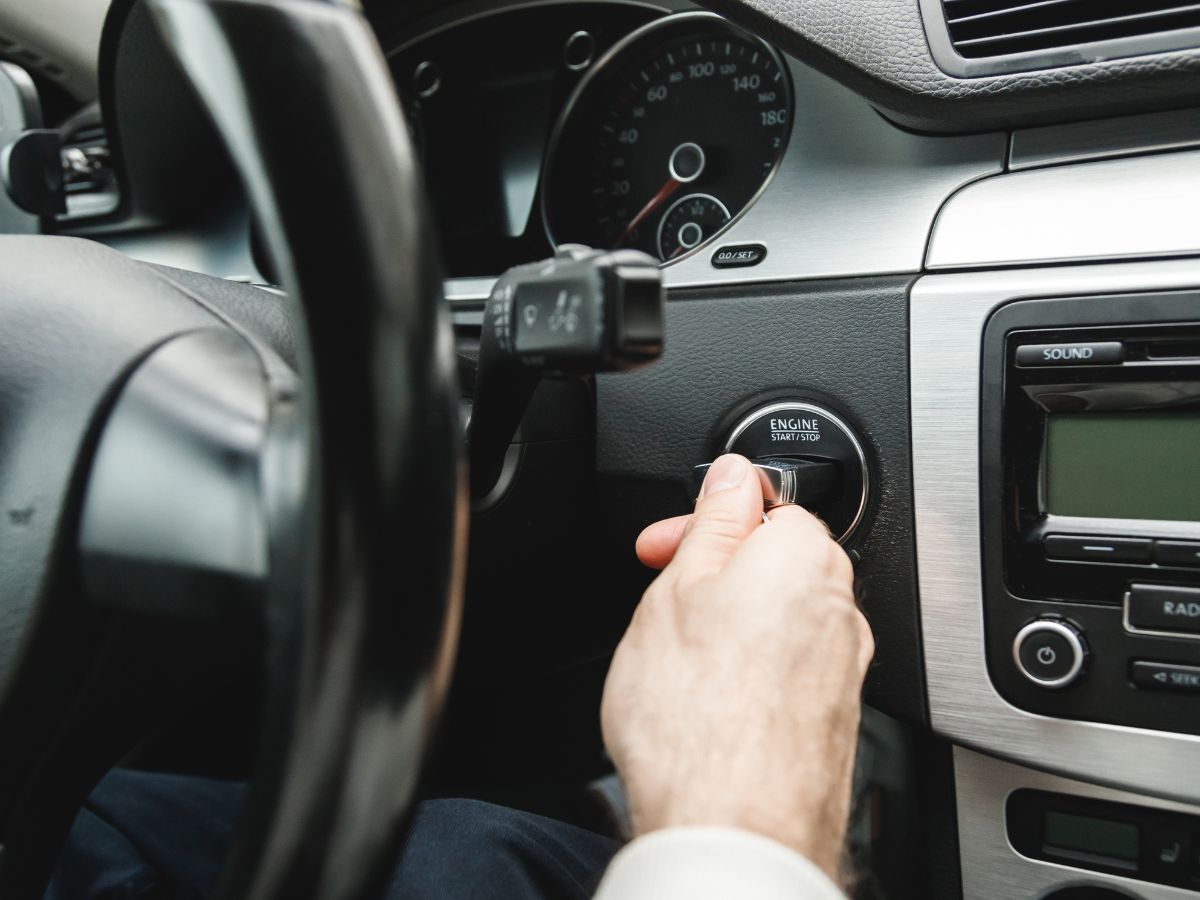
What to Do When Your Car Won’t Start but the Lights Come On
If your car won’t start, you can try turning on lights and other accessories to help diagnose the issue.
Switch on the headlights and try cranking the engine. Do the lights come on? Do they work as normal? Do they dim noticeably when you turn the key in the engine?
If your car won’t start but the lights work as normal, it’s a good sign that something is wrong with the starter motor or ignition. It may be a problem with the starter motor if:
- You don’t hear a click from the engine bay when you turn the key in the ignition
- You hear rapid-fire clicking from the engine bay
- You hear other unusual noises, like a whirring or grinding
There’s no easy way to diagnose a faulty starter motor on your own. An auto electrician can test the system and locate whether the fault is occurring at the starter, ignition or battery.
Alternatively, it may be a problem with the ignition if:
- Nothing happens when you turn the key in the ignition
- Other accessories (such as lights, radios and power windows) don’t work properly
- The engine stalls while driving
- You can’t turn or remove the key from the ignition barrel
If your lights come on, try turning on some of the other accessories, like the radio. This can give you an idea of whether there’s a problem with the ignition.
Ignition systems can be complex. You’ll need an auto electrician to trace the fault and figure out whether it’s a problem with the key, the ignition barrel, coils, or another part of the system.
Get Back On the Road Sooner with Access Auto Electrics and Air Conditioning!
There’s nothing worse than turning the key in your car and discovering that something has gone wrong. If you’ve found yourself stuck in the driveway, book an appointment with Access Auto Electrics!
Access Auto Electrics is an auto electrician that works with customers from all over Brisbane. Cars that won’t start are some of the most common issues we deal with, so we know exactly what to look for.
Our qualified technicians can diagnose any problem and get you back on the road sooner. You can contact us online to make a booking, or give us a call if your car won’t start and you need help!
Frequently Asked Questions
When your car has power (lights, radio, etc.) but won't start, it usually indicates that while your battery has enough charge to run electronics, there's another issue preventing engine cranking. Common causes include a weak battery that can't deliver starting current, a faulty starter motor, ignition system problems, or fuel delivery issues.
Yes, a car battery can be partially dead or weak even if the lights still work. Starting an engine requires significantly more power than operating lights and electronics. A battery might have enough residual charge to power lights but insufficient charge to engage the starter motor and turn over the engine.
To determine if the battery or starter is causing your car not to start:
1. Listen for sounds when turning the key: No sound often indicates a battery issue, while a clicking sound suggests a starter problem.
2. Test the battery voltage with a multimeter (should read 12.6V when off).
3. Check headlight brightness – dim lights suggest a weak battery.
4. Try jump-starting the car – if it starts with a jump but dies soon after, it's likely a battery issue. If jump-starting doesn't work, the starter may be faulty.