

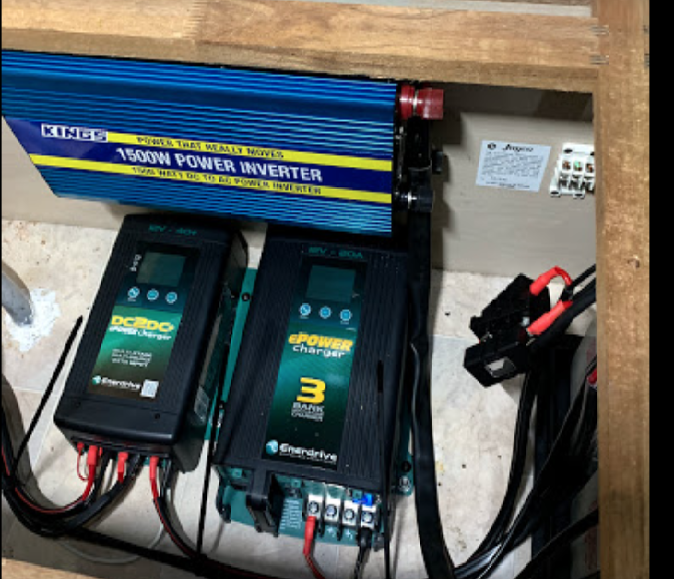
Designing a dual battery setup for your vehicle is a major task. There are lots of options on the market, and figuring out what’s right for your needs is challenging.
Charging your auxiliary batteries is one of the biggest decisions you’ll need to make. The most effective solution is to use your vehicle’s alternator, but this isn’t always straightforward. You need a DC-DC charger if your vehicle has a smart alternator and AGM or lithium auxiliary batteries. We also recommend installing a DC-DC charger if you are using lead-acid auxiliary batteries, but it’s not crucial.
In this article, we’ll go into the details about whether you need a DC-DC charger with a smart alternator and how it affects your dual battery setup.
What is a Smart Alternator?
A smart alternator is a type of vehicle alternator that can vary its output voltage based on operating conditions. Many modern cars and 4WDs are fitted with a smart alternator, as opposed to a fixed alternator.
Like fixed alternators, smart alternators are powered by the engine. As the alternator rotates, it generates an electric current that’s used to charge the vehicle’s starter battery. The amount of current generated depends on the type of alternator:
The advantage of a smart alternator is that they reduce the load on the engine. The less voltage that’s produced, the less strain on the engine. This improves fuel economy and can extend the life of your alternator.
The downside is that smart alternators are specifically designed to recharge your starter batteries. They typically do not measure the state of charge of any secondary batteries, battery chemistry, or the location of batteries relative to the alternator.
How Do I Know if I Have a Smart Alternator?
Most vehicles manufactured from 2015 onwards have smart alternators. If you’re unsure, you can check with the manufacturer, or an auto electrician can test the alternator to see whether it provides a fixed or variable output.
Why You Need a Second Battery
Having a second battery means your vehicle’s main battery can concentrate solely on starting and running your 4WD, without the added strain of powering extra accessories. The auxiliary battery takes over the job of running your camping essentials, such as your portable fridge, lighting, charging devices and any other gear you rely on when you’re off-grid.
This setup protects your starter battery from draining and gives you consistent, reliable power for longer trips. It’s a simple upgrade that makes camping and four-wheel-driving more convenient and stress-free.
What is a DC-DC Charger?
A DC-DC charger is a smart charger that takes the output of your alternator and transforms it to the correct voltage (V) and current (Amps) for charging your auxiliary batteries. You can think of a DC-DC charger as a brain that keeps all your batteries correctly charged.
Without a DC-DC charger, your smart alternator will only measure the state of charge of your starter battery. When the starter battery is at full capacity, a smart alternator decreases its output voltage, which prevents auxiliary batteries from reaching full charge.
Do You Need a DC-DC Charger With a Smart Alternator?
When your vehicle has a lead-acid starter battery and an AGM or Lithium auxiliary battery, a smart alternator cannot effectively charge your auxiliary batteries.
The reason for this is the difference in battery chemistry. Each battery chemistry (e.g. lead-acid vs AGM vs Lithium) requires a different voltage input for charging.
Lithium and AGM batteries require higher voltages to reach a 100% state of charge, which makes them incompatible with your vehicle’s lead-acid starter battery.
Battery Type | Price |
|---|---|
Sealed Lead Acid (SLA) | 14.2V |
AGM | 14.7V |
LiFePO4 (Lithium) | 14.4V |
As you can see, lead-acid, AGM and Lithium batteries all require slightly different voltages during charging. The difference may seem small, but charging at the wrong voltage can damage a battery and significantly reduce its lifespan.
A high quality DC-DC charger will detect the battery chemistry and state of charge, and then provide the correct charging current. This ensures your starting battery and auxiliary batteries can be recharged to 100% simultaneously.
That’s good because it means you’ll always have enough power. It also extends the lifespan of your batteries – which can be a major win if you’ve invested in Lithium technology.
Keep Your Dual Battery System Charged With Access Auto Electrics and Air Conditioning!
Installing a dual battery system can be a serious investment. If you need power when you’re camping, touring or spending time off the grid, Access Auto Electrics can help!
We design dual battery setups for every situation. Our qualified auto electricians will discuss your requirements and specify products that provide the best balance of performance and budget.
We generally recommend installing DC-DC chargers, regardless of the battery technologies you’re using. A DC-DC charger is the best way to ensure you always have the power you need in a pinch.
DC-DC chargers are especially effective when they’re paired with solar panels that can charge your batteries, even when the vehicle is turned off.
Contact us to learn more about dual battery setups. We’ll need to speak with you about your requirements before you bring your car in for an installation.
Frequently Asked Questions
A smart alternator adjusts its output based on the vehicle’s load and driving conditions. It reduces charging when the battery is full and increases it when needed, improving fuel efficiency and reducing engine strain.
You can check your owner’s manual, look for variable voltage readings (often between 12.4V and 15V), or ask your mechanic. Most modern vehicles with start-stop technology use smart alternators.
Yes. Because smart alternators don’t provide a constant charging voltage, a DC-DC charger ensures your auxiliary or dual battery charges correctly and safely.